Monday, April 4, 2016

The History of Love

by Nicole Krauss


           For much of the time I was reading this book I kept thinking the title was utterly bizarre and made no sense. Which is best explained by quoting the opening lines: “When they write my obituary. Tomorrow. Or the next day. It will say, LEO GURSKY IS SURVIVED BY AN APARTMENT FULL OF SHIT.” Such a fabulous opening. But for a book called The History of Love? Really?
            Well, the novel ends up being an elaborate unfurling of this contradiction. The History of Love turns out to be a book within a book, and Leo Gursky turns out to be a character complex enough to have written a book-length elegy to the only woman he ever loved—and also live in an apartment full of shit. And really, in a way, that’s the beating heart of the story; those mystifying contradictions that make each of us so interesting to those who know us best.
            And The History of Love –the outer frame novel—is itself an elegy of sorts, to the generation that fled Poland and the Ukraine in vast numbers when the Second World War broke out, leaving all they knew and cherished of literature and music and art to scrape out paltry livings as unskilled immigrants in New York. Professors and composers, historians and philosophers, writers of subtly nuanced works of art, all cleaning toilets in Brooklyn. Laughed at by children in the street for their strange clothes, bad English, their trailing odors of fish and garlic. They may technically have survived what six million did not, and most were deeply grateful, but they lost their  former lives as surely as did those who didn’t make it out of Europe.
            Nicole Krauss includes pictures of her own grandparents in a dedication that says, “For my grandparents, who taught me the opposite of disappearing.” In the novel many forces conspire to make Leo Gursky, writer of a brilliant work for which someone else claims authorship, disappear into an apartment full of shit. But even as an invisible vestige of a writer, alone and unclaimed by those he loves, even then, when he’s ready, he finds he has more lovely words to stitch together. This fascinating and unusual novel stitches together all kinds of strange and lovely pieces. I highly recommend it.

Friday, March 11, 2016

The Book of Strange New Things

By Michael Haber


This IS a book of strange new things—mostly due to its odd brew of components. On one hand it’s a sci-fi space travel book. On another it’s a tale of religious mission, with a Heart of Darkness type of set-up. And then it’s a quirky love tale, of a relationship fighting for survival. Can you envision a book that merges these elements? I certainly couldn’t—not before I read it.


 And long into the book I was still shaking my head and wondering where it was taking me. But then, as it progressed, I gave up thinking and just inhabited the story, completely transported to the world it built. And what a cool and magnificent world! And what a beautiful story.
cover: book of strange new things

 Set an unspecified number of years in the future, somewhere between fifty and a hundred, The Book of Strange New Things tells the tale of bringing the Christian Bible to the Oasans, the native people of a far-off planet newly discovered by USIC—a global corporation so big that no one can say what it sells. Peter Leigh, the missionary sent to treat with the natives, is a former addict with a long criminal history who’s recreated himself as a minister. This rare opportunity is, for Peter, the apex of all he’s struggled to achieve. Yet he’s also torn between the mission and his wife Bea, left behind on Earth.
 
 I won’t say anything more of the story for fear of spoilers, but instead say how—against all my expectations—I SO enjoyed this book. How refreshing to be along for a journey that defied prediction at every juncture. I kept thinking I knew where it was going, and then bam, it all turned on its head.

 Which isn’t to say the whole book was perfect, for there were a few parts in the middle that sagged, but it was one of the books where the ending is so perfect that you quickly forgive everything else. And I love a story where you don’t know what to make of it until it’s over. Where it’s not until you read the end that you can go back to make new sense of the pieces.

And then—this is the best thing— all at once it adds up to something bigger than the sum of the parts. Which in this case is a deeply complex human bond. A relationship so nuanced it could easily be our own. Where the failings and achievements of each partner add layer over layer to our sympathies.

Until, whatever little we might hold in common, we are friends, confidantes. People who know one another. People who worry one another's worries. Which is love, I suppose. If we can love characters, we love Peter and Bea.          
  
My congratulations to Mr. Haber for quite an achievement. To my own friends, I hope some of you have a chance to read and enjoy this book as much as I did

Sunday, January 3, 2016

The Midwife's Revolt (by Jodi Daynard)


           I freely confess it; this is exactly the kind of book I’m predisposed to like. Which means my recommendation should be served with a good pinch of salt as I’m biased. But if you happen to likewise have a soft spot for historical tales about women that aren’t primarily romances, you might find it as entertaining as I did.
            Set in the Revolutionary era, the midwife in revolt in this tale is one Lizzie Boylston of Cambridge, recently moved to Braintree (both next to Boston) with her young husband Jeb, who, within a few pages, proceeds to die in the opening skirmish of the brand new war. Lizzie and her neighbor Abigail Adams and several other women are left to fend for themselves in Braintree while the war flares and ebbs and creates hardships of every sort. Lizzie, a gifted midwife, saves babies and mothers and takes in stray young women in need of shelter, all of whom band together to outwit a set of British spies. Lizzie is courted by a Patriot but falls for a Tory, after which a number of loyalties and allegiances are tested and strained.
            At one point Lizzie convinces herself the only noble course is to dress as a man and go into Boston to visit a tavern where known conspirators congregate. This, easily, was my favorite part of the book, as Lizzie proved an utterly bumbling spy whom everyone immediately recognizes. I thought Ms. Daynard did a nice job of juxtaposing her heroine’s noble intentions with the reality of a situation far outside her wheelhouse. And she had a dang funny mustache.
             Overall I enjoyed the story and had the sense the historical details were pretty spot on—though it’s not an era I know much about. It reminded me of Cold Mountain in  bringing to life the harsh conditions on farms during war, where the women left behind did the work of the missing men on top of their own. And when the weather fails the crops, scarcities are compounded by wartime shortages.
            One of the more intriguing aspects of the novel is the exploration of the difficult allegiances during this first war between Britain and her colony, where neighbors and even families came down on different sides of the war. The novel depicts how the level of mistrust among people living in close proximity can induce as much—or more—strain than the physical hardships. Lizzie, a staunch Patriot from a family of Tories, forges a friendship with her neighbor Abigail Adams that serves to anchor the story in historical relevance, where the spy plot revolves around John Adams and his doings. I can’t say I found the characters fascinating but there were moments of excellent revelation.
            Thus if you’re not already tired of historical novels of the Revolution, I recommend this one as a good read.

Tuesday, December 8, 2015

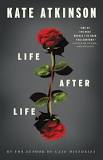
Life After Life


           Kate Atkinson has had a long and distinguished career but I confess this is the first book of hers I’ve read, and it was suggested by a member of my book club. I had little or no expectation going into this book, but Life after Life took me for a loop, doing some utterly ambitious things I’ve never seen attempted before. The premise is that Ursula Todd gets to restart her life every time she dies, going back to the birth and starting over. The degree of ingenuity the author brings to these restarts, keeping certain details and subtly changing others, was a magnificent performance of writerly skill. I was impressed. And Ursula Todd was, in places, an interesting character. However I don’t know that any writerly skill can overcome the inherent challenge—which is how it’s nearly impossible to care about the fate of a character who keeps dying. You tend to develop a so-what attitude whenever there’s anything at stake. So what if it goes bad and she dies—again.
            By far the longest and strongest section of the book was set during the Blitz of London, which Ms. Atkinson brings to life more vividly than almost any other account I’ve read. It even rivals Connie Willis, who spends thousands of pages there. But it’s my own humble opinion that the book should have climaxed there. It felt like the climax. But then there was a whole other hundred pages in which Ursula’s next life takes her to Germany to knock off Hitler, which I can tell you without it being a spoiler because it’s the prologue to the book. To me that section just didn’t ring nearly as true or sound, in part because the rest of the book is so thoroughly English, and Ursula herself is so very English. The whole alternate German life seemed out of character for both her and the novel.
            I have a few other quibbles, mainly with the character of Ursula’s mother, who changes from life to life. She’s a sympathetic character at the opening and then modulates into one you have to loathe, which is all fine if you know why. But the book only hints at things—such as a possible affair we hear of briefly and never again—and doesn’t explore them. It became frustrating to me. And then my bigger quibble is the same one other reviewers have had, which is that the book is long and has a virtuoso gloss, but it doesn’t add up to a moving experience. There’s the strong sense of an empty vessel. Perhaps the same so-what attitude that we develop for Ursula’s fate ends up applying to the novel as a whole—we don’t have enough to care about.
            That said, I’m curious about her detective novels and I’m planning to read the first of her Jackson Brodie series. Kate Atkinson certainly has a big toolbox of writerly craft!

Sunday, November 29, 2015

The Tilted World


            There are some lovely aspects to this historical novel by Tom Franklin and Beth Ann Fennelly. I enjoyed the premise of a federal agent during prohibition falling for the best moonshine maker in the region. I liked the setting and the sense of the impending flood of 1927 – the impetus for the climax. The details were gritty and solid and did a fine job evoking the era of Prohibition on the Mississippi. Certainly it was a quick and pleasant read and I enjoyed the finely-crafted language.
         
   The poetry in the novel no doubt belongs to Beth Ann Fennelly, the poet co-author. To my taste, though, there’s an inherent difficulty in using language that’s so clearly out of the realm of most of us, and especially of federal agent and bootleggers. It can work and in places it does, but in other places the voice of the poetry became for me a distraction, an obstacle to being completely in the world of the characters. I enjoyed it for the love of words, which were certainly quite beautiful, but at the same time regretted I couldn’t immerse more fully in the world of the story. The language jumped out as not belonging to the world of the story, making it difficult to forget or ignore the well-crafted sentences that were telling it.
            Thus I would recommend this book for those of us who like a more ‘literary’ take on an action story—and are willing to trade some degree of immersion for the pleasure of a well-turned phrase.

Tuesday, November 17, 2015

The Doomsday Book


I've never been much of a fantasy reader, but a friend recommended Connie Willis as someone I might like and I thought to take a peek. She's won the Hugo and Nebula awards more times than almost anyone else, so she must be doing something right. I started with the Doomsday Book from 1992, which won the Hugo and kicks off a long series. And I have to say, the Doomsday Book is nothing if not different. It's an odd cross between a cozy mystery - it has that feel to it - and a historical adventure, all tied together by the fantastical rules that govern time travel within the story. 
It’s a long book and I have to confess I thought the middle sagged, as I had trouble pushing through it. Also I didn’t care for the harried way all the characters in Oxford – in the year 2050 – rushed around in a constant panic. Sure they had problems, but some of them were life-threatening and others were about sweaters and bell concerts (hence the cozy mystery feel) and they seemed to induce equivalent frenzy. I began to feel harried myself!
 But then, in that way that some books do and I really admired in this one, the ending pulled together all the pieces and uplifted the story to something moving. The protagonist Kivrin is quite a trooper and Ms. Willis pulls off a real sense of connection between her and the Oxford professor who sends her back to the Middle Ages via time travel. Which, as you might imagine, doesn't go so well.
What I liked best in the ending was the refreshing nature of the bond between a professor and a student, not a romance or even a typical friendship. It was a good read and I went on to read the first in her two-book series about time travel back to the Blitz. I’ll post more when I’ve read the second one!

Friday, March 27, 2015

Come get a book signed next Saturday the 4th!

Haymaker Card and Gift will host a book signing for two new books by local authors on Saturday April 4th from 11 AM  until 1PM.

Hardwick author, Jodi Lew-Smith has written an action packed historical adventure fiction book set in 1810 USA. Her main character is a self-sufficient “nose-to-the-grindstone” never-give-up female inventor in a time few young women stepped outside the home and hearth.  Lew-Smith has already won several awards in the literary world for this book.  Top 10 on my list for this year!

Tim Hayes, now of Johnson Vermont, a nationally recognized Natural Horsemanship Clinician.  Has written a non-fiction book, Riding Home, the Power of Horses to Heal.  This is a must have for anyone who wants to understand the special relationship that can develop between horse and person.

Haymaker in historic downtown Morrisville is pleased to present these two fine authors and their books.  We will have 3 gift basket door prizes for those who attend the signing.

Friday, March 6, 2015

All the Light We Cannot See

I'm very late to the game of recommending this book, but in case you haven't heard of Anthony Doerr's new book, put it on your reading list right now.

What most impressed me about this book was Doerr's incredible patience in spinning this tale. He told it with little short chapters that each imparted a tiny piece of a larger puzzle, with a time sequence that flowed back and forth across present, past, and further past. There was something as precise in his technique as the careful craftsmanship of the model towns built by a father for his blind daughter in the story. There was something at once lavish and spare about the style, for the book as a whole provided a luxurious lake of detail, but did it one little thimbleful at a time.

I found the technique refreshing and thought it worked especially well for this story, which tells of a blind French girl and a radio-loving German boy whose paths eventually wind together just as the tides of the war turn in August of 1944. It's lovingly written and full of delightful small touches. I hear it took many years to write and I believe it!

Saturday, October 25, 2014

The Subtlest Soul (Virginia Cox)


I am pleased to report that I have an indie book to recommend! I found Virginia Cox’s as an award winner at the Historical Novel Society site and was quite pleased that I fully agreed with the assessment of historical novelist Elizabeth Chadwick, judge of the award, when she said, “The history felt real and right. It was an immersive experience.  It was one of those books where I needed to know what happened next and kept having to go back and pick at it - you know like when you have that opened bar of chocolate in the fridge!” (Her full blog post on it is here)

I too found the story an addictive visit to the world of medieval Italy at the time of the Borgias— with all the attendant scheming, stabbing, and poisoning to be rivaled only by the Tudors, or perhaps the heyday of ancient Rome. It’s a time period I know only from my enjoyment of Dorothy Dunnett’s Niccolo series (thus not by any actual history, only via fiction) and it’s not one of my first choices for settings—however a good story makes any setting fun. Cameo appearances by Leonardo da Vinci and Michaelangelo were intriguing, but Cox also managed to weave in Niccolo Machiavelli as a key player in the plot. In fact his words from The Prince underscore the entire novel: “It is necessary for a ruler, if he wishes to survive, to learn how to be not good, . . . “ Certainly the characters in this novel are excellent students of “not good!” 
Fictional protagonist Matteo de Fermo is a low-born man surrounded by powerful nobility who have use for him—mostly as a spy. The first person narration gives immediacy to his many predicaments and helps us feel the danger of serving so many dangerous men—and women—all at once. Matteo comes alive for us because his pervasive awareness of his own low status plays counterpoint to the physical beauty and quick mind that pique the interest of everyone he encounters. His star will seem to be rising and then, whoosh, at the whim of one of his many masters he is lying on a hard board in a cold cell crawling with lice. Turn a few more pages and voila, he makes a quick-witted observation, hides a coded note, and now he’s wearing a fancy satin doublet with a sharp dagger in his sleeve once more. Ms. Cox does a wonderful job of building each new adventure on the foundation of the last, letting the tale unravel in a series of twists and turns that are complex without being convoluted. What a fine achievement!

The novel isn’t short and thus I suggest it for a long flight or a rainy weekend—but it’s a wonderfully fun time and the historical details are both precise and delightful. If you like historical adventures, put it on your list to read. I can’t wait to read another by her!

Sunday, September 14, 2014

A Tale for the Time Being


OK so it’s not an indie book, but I remembered another that I read this summer and neglected to write up immediately. A Tale for the Time Being is a gem.

The novel has many qualities of a dream. The story moves across time and oceans and there are moments when you’re not sure what’s real, and many where you’re not sure which voice is the author and which is the character who has many qualities of the author—as they’re both writers named Ruth who live in the Pacific Northwest. Which makes it sound like a bad literary novel when in actuality it’s a fabulous story with voices—especially that of the girl Nao—which are vivid and strong and utterly intriguing.

The world of the book explores much of Zen Buddhism, physics, and other areas of philosophical thought that you can delve into or ignore as little or much as you like. They don’t interrupt the flow of the story (except perhaps a little at the end, but that’s a quibble) and they give it a timeless quality that makes an interesting juxtaposition to the urgent day-to-day actions and anxieties of Ruth and Nao.

I won’t say any more except that Michael and I both loved this book as something refreshing and unique. And we both fell in love with Nao’s grandmother, the 104-year-old Zen Buddhist nun named Jiko.

Go meet her.

Thursday, August 28, 2014

Angle of Repose

I had begun Wallace Stegner's Angle of Repose about ten years ago and I think I wasn't ready to read something so subtle. I hadn't matured enough yet. A friend told me several months ago that she'd had a similar experience of reading it many years apart and finding it a completely different book. She encouraged me to give it another try. 

While recuperating from a surgery this summer I had more time than usual to read and decided it was just the book to keep me company. This may not have been such a hot idea because the main narrator of the story is a man suffering from a debilitating illness that has him in pain much of the time and, as I was feeling much the same at the moment--and not so eager to read about more of it--I read those sections with one eye closed. But despite that I greatly enjoyed the book on many levels.

I think you do have to be a certain age or mind-frame to savor a book that moves at a modulated pace and spends ample time on descriptions of both the outer world of the setting and the inner world of the characters as they grow and change. Both Lyman Ward, mentioned above, and his grandmother Susan Burling Ward, the other primary force, are complex nuanced people who struggle to rectify the many ugly indignities of their real-time lives with the longing for beauty in art and culture that governs their inner worlds. Shifting between Lyman Ward living as a near-recluse in 1970 and the vivid life of his grandparents as they came west to make their fortunes in the 1870's, the novel swings between one stagnant setting and one fast-moving setting. Yet the stagnant setting is resonant with Lyman's voice as he struggles to keep working on his grandmother's biography amidst the pain and humiliation of his debilitating disease. His voice rings clear and true and poignant. 

The more swashbuckling setting of the artist Susan Burling Ward and her husband Oliver moving from mining camp to mining camp as he takes on various engineering jobs is lush with color and motion, packed with dozens of interesting minor characters from many cultures. As many people have noted, it's a magnificent portrait of the early west. Susan Ward's struggle to hold onto the world of art and letters she left behind in New York as the the daily circumstances of her life continue to deteriorate create a tension that nearly vibrates off the page. Her intense love for her husband and children spars with her deep wish of escaping back to the world she loves--and craves--nearly, but not quite, as much.

In the end I was left with two overriding emotions. First was a powerful sadness for both Lyman and Susan, both of whom struggled to find the courage to endure their many disappointments. There was a great beauty in their endurance. The second was a warm glow of appreciation for the fine writing that brought their world to life and allowed me to spend time there. I felt like I'd visited much of the early west and could nearly shake the parched dirt from my shoes. (If I'd been able to reach my shoes at the time. . .)

In the end, then, I recommend this book to anyone who feels they are ready for it. It's a magnificent treat when you can savor it like you would anything slow and deep and finely-wrought.

Thursday, June 12, 2014

The Writing Life June 2014

I think this is the best time ever. Period.  It took ten years but I finally got my first book out into the world and now people are beginning to read it and tell me what they think. It's all I ever wished for. I can't hope that everyone will love it, but I think I can hope that some people will love it and others will at least like it.And what's to hate about a fast, fun read?

But what I can secretly hope for is that somehow over time there will be people who will go back and read it more slowly. Take time to lift the flaps and look into the nooks and crannies, to notice the goodies I put there for people to find.  Or not. Perhaps it will only ever be me who lifts the flaps, smiles a little, and lets them back down. That would be all right too.


Northern Borders

If you haven't read anything by Howard Frank Mosher, don't wait too much longer. He's written a mix of novels and memoirs and they're all whimsical and wonderful in their own way. My favorites are the novels set in and around his own town up here in the northern woods of Vermont. In his books our own Northeast Kingdom becomes "Kingdom County" and names are changed in various ways, however the smoky do-it-my-own-way-or-be-damned flavor of the place and people is perfectly preserved. Maybe it takes a transplanted flatlander (someone not from Vermont) like Howard or like me to savor how different this place is from so much of the rest of our country, but year after year I continue to marvel at the way people do things up here. Reading about these people in Howard Mosher's books holds the pure delight of diving into the world of people who, viewed from a distance, inhabit a world of mystery and intrigue I will never fully understand. 

I chose Northern Borders to highlight here because I think it's my favorite of his books and it hasn't received the attention that some of his others have received. Several of them - including Where the Rivers Flow North and Disappearances - have been made into movies. Northern Borders, though, to me captures the essence of the place more deftly than any others. It's set largely on a dairy farm in the 50's, where a young boy goes to live with his grandparents and joins their life of ridiculously hard work blended with numerous small joys and deep pleasures. The story follows Austin Kittredge through his young adulthood as it simultaneously follows a tiny Vermont town that belatedly joins the mechanized world of modern America. (Though always at least a decade behind, as Vermonters have to be pried away from anything they're used to.)

And like any good story, it holds a central mystery that comes at you sideways and makes the whole story resonate with hidden meaning.  This is a fine sweet read that is worth savoring.

Thursday, May 15, 2014

The Boys in the Boat

Other than the research for my books, I don't read a lot of non-fiction these days. However The Boys in the Boat sounded so intriguing when recommended by Linda Ramsdell of the wonderful Galaxy Bookstore that I bought a copy for my son at the holidays. And pretty soon after he was done I began it myself. And then I couldn't put it down. It's an absolutely fascinating read that sucks you into the world of rowing and then, before you know it, under Hitler's nose in the 1936 Olympics. The story itself is enough to drive the book, but Dan Brown also does a masterful job of weaving one of the "boys" into the forefront of the tale so as to create a vivid picture of his humility even in the face of astounding success. Mostly, though, it's a magnificent tale of people taking part in something bigger than themselves, something more than the sum of the individuals who make a team. I highly recommend it!

Saturday, February 15, 2014

The Writing Life February 2014


Feb 2014 - notice buried truck
We got two feet of snow yesterday, schools all closed, and much of Vermont raced outside to play in it. I bade farewell to my children and then, like most other writers in the world, I plopped into my chair and tried to concentrate. But the snow swirling in the gusts outside were so beautiful that I kept finding myself staring out the window. I did get work done, but half as much took me twice as long as my eyes kept leaving the screen to look into the the sparkling white outside. Here's what I see out my window. 

Friday, January 24, 2014

AUTHORS - U to Z

 Sarah Waters

Fingersmith

            I found this a little slow in the middle, but mostly it’s a wonderful example of a recently-penned Victorian novel. Everything about the plot—except the gender of the lovers—is fully Victorian gingerbread, including the intricate deceptions, thieves with thick Cockney accents, mistaken identities, improbable coincidences. What’s not to love?

Carlos Ruiz Zafon

Shadow of the Wind 

            I have a soft spot for stories about books. In this one, everything about the search for the mysterious sole surviving copy of a book by an enigmatic author who lurks at the edge of the story is like candy to me. The entire setting is like the best haunted house you might ever be able to imagine. One with a dusty library full of books that harbor all kinds of wonderful secrets. Usually these kinds of novels about books are strong on set-up but then fail to follow through. And in truth that’s kind of what happens in other of Zafon’s books I’ve tried to read. But in this one book, he utterly and completely nails it. It’s a purely delightful read. Most everyone who likes the smell of books will like this one. 

Markus Zusak

The Book Thief 

            Most people have read this so I won’t say much about it, other than I loved it and thought it did so many delicate things really well. As soon as I finished it I told everyone I saw to read it. I only do that once every five years or so. 

AUTHORS - P to T

 Marilynne Robinson  

Gilead 

            I don’t read a lot of literary fiction because I typically find it too slow. I’m all for character-driven plots, but the plot needs to have some motion to keep me going. Beautiful writing alone isn’t enough. That said, a literary novel about an Iowa minister holds no obvious appeal for me, however I had loved her earlier book Housekeeping so I was disposed to read this one. To my shock I read it once and then started over to read it again. I NEVER do that. Gilead completely blew me away as a near-perfect book. It has just as much story as it needs, the driving voice of a man you cannot help but love, and Marilyn Robinson’s signature exquisite writing that, when she nails it, brings tears to your eyes. Or at least it does for me. What especially made this one transcendent for me was the love between the characters. Where Housekeeping is just as gorgeously written, in the end the characters are unconnected, alone and cold. In Gilead, the voice of the humble minister is ennobled by his love and worry for his wife and child, making of him an unlikely but warmly engaging hero. I can’t do any justice to this book in talking of it. It simply must be read.

Rainbow Rowell

Eleanor and Park 

            Voices voices voices. Ms. Rowell does her voices with great facility and I found this one hard to put down. Eleanor and Park are remarkably vivid characters. I thought the plot was maybe a little manipulative but I think I’m splitting hairs…

J.K. Rowling

The Harry Potter series 

            I think these are brilliant, especially for the humor and complex plotting. 

Norman Rush

Mating 

            Extremely erudite, but clever throughout. Excellent means to double your vocabulary.

Mary Doria Russell

The Sparrow 

            I didn’t read a lot of fiction while in graduate school for plant biology, but among what I did read, this was my favorite book. It’s written by another scientist-cum-writer like me, and has a few of the same features, including a highly intricate plot. Perhaps it’s the scientists in us that seek to unravel complexity. I believe you’d categorize this as science fiction, which is not a genre I typically read, but this one is so very good in so many ways that it matters not at all. The characters are fascinating and memorable, the plot is intriguing on many levels, and the resolution to the central mystery is breathtaking. Quite an achievement. Also, it’s fitting but ironic to list this just before the Lymond Chronicles, as I learned of Dorothy Dunnett from Mary Doria Russell, another fan, and the recommendation launched me into a deep and abiding passion for historical fiction (hence the irony). 

Richard Russo

Empire Falls 

            I greatly enjoy Richard Russo’s writing. He has a powerful gift for characters, especially male characters.

Bridge of Sighs 

            This is another of my favorite Russo books. It contains one of his few interesting female characters in the form of Theresa Lynch. 

M.L. Stedman

A Light Between Oceans 

            My husband and I both completely enjoyed this book and I think it’s probably the best book I’ve read in 2013. It surprised us in many ways, and was vivid and compelling throughout. It has a completely unusual setting and an engaging premise—especially for those of us with kids. I have one complaint about the ending but it’s relatively minor and I won’t say anything more for fear of spoilage. 


Wallace Stegner

Angle of Repose

[see post 8.28.14 for the full-length review]
I had begun Wallace Stegner's Angle of Repose about ten years ago and I think I wasn't ready to read something so subtle. I hadn't matured enough yet. A friend told me several months ago that she'd had a similar experience of reading it many years apart and finding it a completely different book. She encouraged me to give it another try. 

I think you do have to be a certain age or mind-frame to savor a book that moves at a modulated pace and spends ample time on descriptions of both the outer world of the setting and the inner world of the characters as they grow and change. In the end I was left with two overriding emotions. First was a powerful sadness for both Lyman and Susan, both of whom struggled to find the courage to endure their many disappointments. There was a great beauty in their endurance. The second was a warm glow of appreciation for the fine writing that brought their world to life and allowed me to spend time there. I felt like I'd visited much of the early west and could nearly shake the parched dirt from my shoes. (If I'd been able to reach my shoes at the time. . .)

In the end, then, I recommend this book to anyone who feels they are ready for it. It's a magnificent treat when you can savor it like you would anything slow and deep and finely-wrought.

AUTHORS - K to O

 Stephen P. Kiernan

The Curiosity 

            This is a super fun read. It’s got an awesome premise in the reawakening of a man who froze nearly a hundred years earlier and is reintroduced to American life a century later. Written from four very different perspectives, the opportunity to see the players from all sides is entertaining and cool. My one complaint is that I had the sense of the novel having been rushed out the door before it was fully baked. Besides the errors in the text, there are numerous potentials that weren’t fully realized and some rather glaring holes in the plot. Mostly I quibble about the main woman character, who’s characterized as a “true scientific genius” but fails to ask even the most basic scientific questions—and mostly does whatever the plot needs her to do. I won’t say any more than that, but will unreservedly recommend this for a fun read that’s nearly impossible to put down 

Laurie R. King

Folly 

            I wasn’t sure about this one at first but I then came to really savor it. Rae Newborn is a super vivid protagonist and the setting on an island in the San Juan’s is almost equally vivid.

Barbara Kingsolver

The Poisonwood Bible

            I’m not as much a dedicated fan of Barbara Kingsolver as many people I know, but I did completely love this book. It reads like a classic magnum opus, every word sure-footed and solid, flowing along as if unfolding. I plan to read it again.

Charlie Lovett

The Bookman’s Tale 

            As with Shadow of the Wind, this is a story about a book and I love little better than a good one of these.            

David Mitchell

The Thousand Autumns of Jacob de Zoet  

The scope of detail in this novel is staggering. Truly impressive and staggering. The depth of the detail sweeps you away to the world of late eighteenth century Japan for a dose of a feudal society still closed tight like an oyster but on the brink of being pried open by Dutch and English traders.  It’s a smart book in many ways, sophisticated and richly flavored. The characters and plot are good if not great, but certainly it’s the setting and the history that are absolutely worth reading this for. It’s like a fine old cabernet for lovers of historical fiction.

Kate Morton


The Secret Keeper

    Kate Morton is a seriously good story weaver. This one is chock full of characters and time periods and she keeps it all unfolding one small piece at a time so you're left guessing the whole way. For me her books are pure candy. Almost all her settings feel mysterious and remote, full of magic possibility. Her characters are mostly smart and thoughtful, though some of them are hard to get a grasp on because they either change too much from one time period to another or else they are being kept at arms length to serve the machinations of the plot. But overall her books are a treat for those of us who love a good little mystery in a wonderfully gothic setting!

The Forgotten Garden 

            A secret garden on a large estate and a book of mysterious dark fairy tales form the core of this story, which was a fun read all the way through.


Howard Frank Mosher

Northern Borders 

         If you haven't read anything by Howard Frank Mosher, don't wait too much longer. He's written a mix of novels and memoirs and they're all whimsical and wonderful in their own way. My favorites are the novels set in and around his own town up here in the northern woods of Vermont. In his books our own Northeast Kingdom becomes "Kingdom County" and names are changed in various ways, however the smoky do-it-my-own-way-or-be-damned flavor of the place and people is perfectly preserved. Maybe it takes a transplanted flatlander (someone not from Vermont) like Howard or like me to savor how different this place is from so much of the rest of our country, but year after year I continue to marvel at the way people do things up here. Reading about these people in Howard Mosher's books holds the pure delight of diving into the world of people who, viewed from a distance, inhabit a world of mystery and intrigue I will never fully understand. 

I chose Northern Borders to highlight here because I think it's my favorite of his books and it hasn't received the attention that some of his others have received. Several of them - including Where the Rivers Flow North and Disappearances - have been made into movies. Northern Borders, though, to me captures the essence of the place more deftly than any others. It's set largely on a dairy farm in the 50's, where a young boy goes to live with his grandparents and joins their life of ridiculously hard work blended with numerous small joys and deep pleasures. The story follows Austin Kittredge through his young adulthood as it simultaneously follows a tiny Vermont town that belatedly joins the mechanized world of modern America. (Though always at least a decade behind, as Vermonters have to be pried away from anything they're used to.)

And like any good story, it holds a central mystery that comes at you sideways and makes the whole story resonate with hidden meaning.  This is a fine sweet read that is worth savoring.

AUTHORS - F to J


Charles Frazier

Cold Mountain 

            Again, a book so many people have read that I needn’t say much about it, but it has everything I love in a book and more. It was another that helped launch me into a career in writing historical fiction. 

Elizabeth Gilbert

The Signature of All Things

            I know of several people who adored every word of this book. I myself found it slow throughout the first two-thirds but then, when it got moving in the last third, I found it worth the wait. It’s a wildly ambitious book and beautifully written. Ms. Gilbert strives to put a character at a pivotal crossroads within scientific discovery and do it from the world of plants, not animals. It would be really easy to screw this up in a multitude of ways—I can only wince at the thought of trying it—but she not only achieves her lofty ambition but achieves it engagingly enough to sweep us along with her. The depth of her research is remarkable. I had mixed feelings about Alma Whittaker as a character for much of the book, but in the end I did feel I knew and admired her, and I expect I will remember her.

John Green

No Fault in Our Stars 

            A love story of teenagers with cancer? Sounds uplifting. By some miracle, it is. I think the miracle is John Green’s gift for voices—those elusive things that writers strive to get right. John Green has a truly remarkable knack for these, and out of it comes a book that teaches anyone who reads it something of how you endure a disease that strikes people in ways that make no sense and are completely unfair. By some further miracle it’s a book you can’t put down.

Mark Helprin

A Soldier of the Great War 

            Mark Helprin is a real writer’s writer, whatever that means. I think it means he tries really hard things in his writing and more often than not, he pulls them off. When he pulls them off especially well, it’s astounding. That’s what I think of A Soldier of the Great War, a book I completely adored and plan to read again. Not only is it a great read with a stellar main character, it’s a great primer on Word War I, a period I continue to wish to study more than I actually study it. Also, it’s worth mentioning that if you like short stories, Mark Helprin writes brilliant ones. He has several collections.

John Irving

Cider House Rules 

            This is a favorite book of my teen years and I still think of it fondly. John Irving’s perfectly-balanced plot is a model of how to construct one of these, and his premise and characters are completely unique. To my mind, the things he does well he does best in this book. (Also, the setting for the orphanage in the movie was the abandoned state hospital for the insane that I lived near in Northampton, MA for a number of years. Unfortunately torn down now, it was one of the coolest settings ever.)

Sarah Orne Jewett

Country of the Pointed Furs 

            I’ve counted this among my favorite books for many years but I confess that I haven’t re-read it in ten or more years, and I wonder if I will love it quite as well as I used to. Books are like that sometimes. Certainly I love the setting of this one—the story of an herbalist on the coast of Maine. It’s not a page-turner, though. More of a reflective meditation within a series of connected tales. And of course, lovely writing.

AUTHORS - A to E

Jane Austen

Pride and Prejudice 

            Seems trite to even list this book. But certainly I have loved it. And Sense and Sensibility and Persuasion are right up there…

Charlotte Bronte

Jane Eyre 

            Unequivocally my favorite book. I re-read it every five years or so and I find something new to love every time. Jane shaped my own life and undoubtedly Ella’s as well. It’s a book with some of everything: a near-gothic plot, a roguish love story, an odd but endearing heroine, gorgeous writing. I can’t imagine how Charlotte Bronte accomplished this masterpiece of close, introspective writing so far ahead of her time. 


Dan Brown

The Boys in the Boat

        Other than the research for my books, I don't read a lot of non-fiction these days. However The Boys in the Boat sounded so intriguing when recommended by Linda Ramsdell of the wonderful Galaxy Bookstore that I bought a copy for my son at the holidays. And pretty soon after he was done I began it myself. And then I couldn't put it down. It's an absolutely fascinating read that sucks you into the world of rowing and then, before you know it, under Hitler's nose in the 1936 Olympics. The story itself is enough to drive the book, but Dan Brown also does a masterful job of weaving one of the "boys" into the forefront of the tale so as to create a vivid picture of his humility even in the face of astounding success. Mostly, though, it's a magnificent tale of people taking part in something bigger than themselves, something more than the sum of the individuals who make a team. I highly recommend it!

A.S. Byatt

Possession 

            This is perhaps best suited to those with a strong literary bent, as it’s the story of two scholars discovering a treasure trove of undiscovered documents. It’s so perfectly well-done, though! Byatt’s creation of the treasure trove of poems and letters is in itself a remarkable accomplishment. Add to that a decent mystery and love story, and it’s a delicious read for those of us who like poetry and old documents.  

Tracy Chevalier

Remarkable Creatures

            Recommended to me by one of my editors, this is a really enjoyable read. Take the setting and time period on a beach packed with fossils, add a pair of interesting lead characters and an interesting time in science, and you’ve got all you need.

Suzanne Collins

The Hunger Games series 

           I think these are brilliant, especially for the pacing and character depth.

Dorothy Dunnett

The Lymond Chronicles 

            Dorothy Dunnett has had the single most profound influence on the writer I’ve become. I went through a phase when I first moved to Vermont and my children were young that I read nearly no other writer. This is possible because her books are so long. I savored the six books of the Lymond Chronicles, then her one singleton retelling of the Macbeth legend called King Hereafter, and then made a valiant attempt to get through the eight books of the Niccolo series. In the aftermath, I can only say that she remains larger than life to me. Her facility with both language and storytelling have, to my mind, no equal. And her erudite wit is unmatched. In fact I can hardly read her these days because I grow too despairing of ever reaching a fraction of her skill. That said, it seems to be a pattern that only about 2% of readers can get through her books. The other 98% say, “this is too dang dense” and slam it down. I’ve had this experience in recommending her to others, and I’ve heard the same from others who love her books but can’t get anyone else to read them—they’re too dense. If you look her up, though, you’ll see she has a small but almost cultish following across the globe of people who worship her books. The Lymond Chronicles is widely-considered her best work. The Niccolo series gets bogged down in too much historical detail and an oddly-constructed plot and few people finish them. King Hereafter is quite good, though. If you happen to be in the 2% who can read her books and you haven’t read them yet, I envy you!


Geoffrey Eugenides

Middlesex

            Again, a book that seems effortless but is clearly the result of remarkable vision and powerful tenacity. Each piece fits neatly into the next slot, which has been built under your nose while you weren’t looking. This one does it all right.